

Cost is the question every business buyer wants answered before they can move forward — and it is the question that almost every 3D animation studio answers vaguely, late, or not at all. ‘It depends on scope’ is technically accurate but commercially useless to a marketing director who needs to build a business case, a procurement team that needs a budget line, or a founder who needs to know whether 3D animation is even in reach.
This guide gives you the real numbers — calibrated to the U.S. market in 2026. It explains what drives cost variation, what you get at each investment level, where businesses consistently overspend and underspend, and how to get an accurate quote for your specific project. By the time you finish reading, you will have a clear enough picture of 3D animation pricing to have an informed conversation with any studio.
Why 3D Animation Pricing Varies So Widely
The range of prices you will encounter when researching 3D animation — from a few hundred dollars on freelance platforms to hundreds of thousands of dollars for enterprise production — reflects genuine differences in what is being delivered, not arbitrary markup. Understanding the variables that drive cost is the prerequisite for evaluating any quote.
Complexity of 3D Modeling
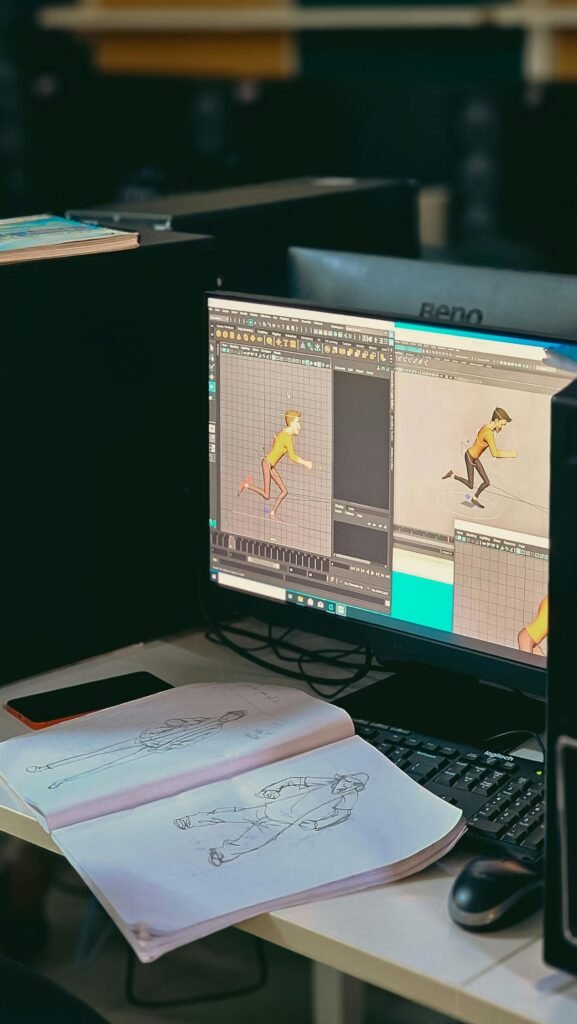
Every 3D animation begins with models — digital representations of every object, character, and environment in the scene. A simple product with clean geometric forms requires far less modeling time than a complex mechanical assembly with dozens of moving parts, or an organic character with detailed facial anatomy. Modeling hours are the foundation of most 3D animation cost structures.
Duration and Scene Count
A 30-second animation requires fewer assets, fewer keyframes, and less rendering time than a 90-second animation — but the relationship is not linear. Much of the cost in 3D animation production is front-loaded in modeling and rigging. The per-second cost of additional duration is lower than the per-second cost of the first 30 seconds.
Level of Photorealism

Stylized animations — flat-shaded, cel-shaded, or illustrative in aesthetic — require significantly less texturing, lighting, and rendering time than photorealistic productions. A photorealistic product visualization, where every surface material must be accurately simulated and every light source precisely calibrated, demands substantially more production hours and rendering compute than a stylized explainer.
Animation Complexity
A product that rotates on a turntable is animated. A character that runs, jumps, and delivers an expressive performance is also animated. These two tasks have almost nothing in common in terms of production hours. Character animation — particularly with facial performance — is among the most labor-intensive work in 3D production.
Rendering Requirements
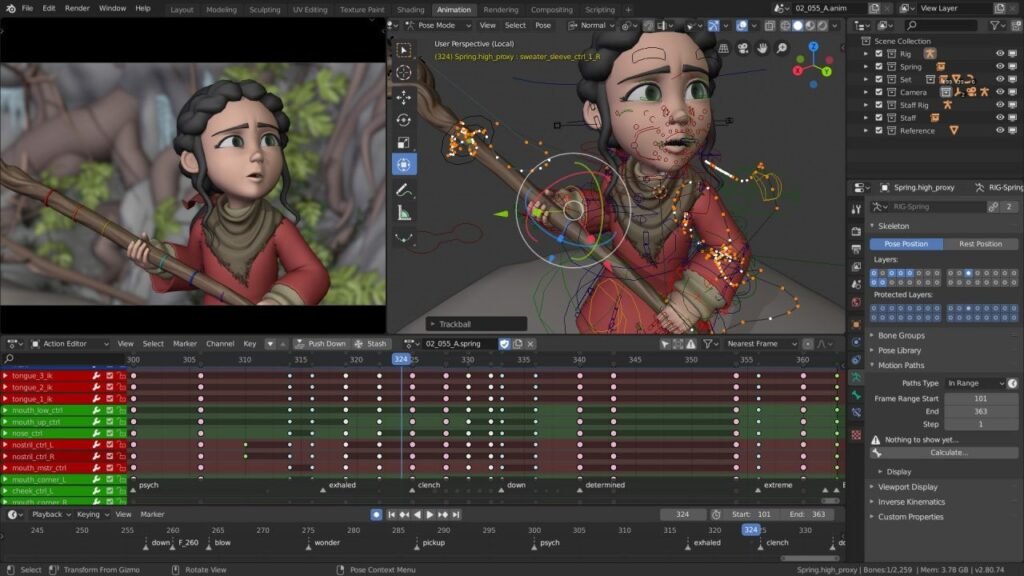
Photorealistic rendering is computationally intensive. Complex scenes with accurate global illumination, reflections, refractions, and volumetric effects can require hours of compute time per frame. A 30-second animation at 24 frames per second contains 720 frames. At two hours per frame on a standard workstation, that is 1,440 compute hours — a significant cost driver that many businesses do not anticipate.
Revisions and Scope Management
Well-scoped projects with clear briefs and efficient revision processes consistently cost less than open-ended engagements with vague creative direction. Most studios include a defined number of revision rounds in their base pricing. Revisions beyond that scope are billed additionally. This is not a gotcha — it is a structural reality of creative production that businesses can control through strong brief preparation.
| The single most effective thing a business can do to control 3D animation cost is invest serious time in the brief before engaging any studio. Clarity reduces hours, and hours are cost. |
3D Animation Pricing by Investment Level

The following framework reflects professional studio pricing in the U.S. market as of 2026. Freelance platforms will show lower headline rates — the full cost considerations of those engagements are addressed separately below.
| Investment Level | What It Typically Delivers in the U.S. Market |
| Entry: $2,000–$6,000 | Simple product turntable or logo animation; single object, minimal environment; limited texturing; stylized or semi-realistic finish; 15–30 seconds; suitable for social media or basic website use |
| Standard: $6,000–$18,000 | Quality product visualization with environment; 30–60 second explainer; 2–3 scenes; solid photorealistic or polished stylized finish; multiple format deliverables; suitable for website hero, advertising, pitch decks |
| Professional: $18,000–$50,000 | Multi-scene production; high-fidelity photorealistic rendering; character animation at commercial quality; architectural walkthrough or complex mechanical animation; broadcast-ready deliverable; 60–120 seconds |
| Premium: $50,000–$120,000 | Cinematic-quality brand commercial; complex character performance; VFX simulation elements; full audio design; multiple hero formats and campaign derivatives; broadcast and streaming ready |
| Enterprise: $120,000+ | Full campaign production; multiple hero assets; character series; ongoing retainer; complex scientific or medical visualization; enterprise pipeline integration; dedicated project management |
These ranges represent professional studio engagements with contracts, revision policies, asset ownership provisions, and deliverable standards. They are not the prices you will find on Fiverr or Upwork — and the reasons for that gap are worth understanding.
Professional Studio vs. Freelancer: The Real Cost Comparison
The headline rate on a freelance platform can look dramatically lower than a professional studio quote for a similar scope. A full accounting of the cost comparison tells a more nuanced story.
| Cost Factor | Freelancer | Professional Studio |
| Production rate | Lower hourly / project rate | Higher hourly / project rate |
| Revision rounds | Often unlimited and unclear | Defined; additional rounds billed |
| Contract and IP clarity | Variable; often ambiguous | Clear ownership transfer and licensing |
| Project management | Self-managed by client | Included; dedicated project manager |
| Quality consistency | Highly variable; portfolio-dependent | Consistent; studio standards enforced |
| Timeline reliability | Risk of delays, ghosting, capacity issues | Contractual milestone delivery |
| Post-delivery support | Rare; relationship typically ends at delivery | Standard; revisions and asset queries supported |
| Scope creep risk | High; informal agreements expand easily | Low; scope documented and controlled |
For businesses producing a one-time, low-stakes social media animation, a skilled freelancer can be the right choice. For anything that will represent the brand in a significant context — product launch, advertising campaign, trade show, investor pitch, enterprise RFP — the risk profile of a freelance engagement rarely justifies the apparent saving.
Pricing by Animation Type
Beyond the investment-level framework, it helps to understand how pricing typically breaks down by the specific type of animation being commissioned.
| Animation Type | Typical Price Range (Professional U.S. Studio, 2026) |
| Product visualization (single product, 30 sec) | $5,000 – $18,000 |
| Product visualization (multiple variants/environments) | $15,000 – $40,000 |
| 3D explainer video (60–90 sec) | $12,000 – $35,000 |
| Architectural walkthrough (60–90 sec) | $15,000 – $45,000 |
| Brand commercial / hero film (30–60 sec) | $30,000 – $100,000+ |
| Character animation (30–60 sec, single character) | $20,000 – $60,000 |
| Medical / scientific visualization (60–90 sec) | $18,000 – $60,000 |
| Corporate training animation (per module, 3–5 min) | $25,000 – $70,000 |
| Social media animation package (3–5 short assets) | $8,000 – $25,000 |
What Drives Quotes Higher Than Expected

Businesses often receive quotes that exceed their initial expectation. In most cases, the gap reflects genuine scope factors that were not visible in the brief. The following are the most common cost-inflating variables.
- Insufficient reference material: When a studio cannot find relevant portfolio examples to anchor the style, they price risk. Providing clear style references reduces this pricing buffer.
- Multiple approval stakeholders: Projects with large internal review committees generate more revision cycles. Studios price for the number of rounds in the brief — if your process involves five stakeholders, account for that.
- Tight deadlines: Compressed timelines require overtime and priority scheduling on render farms. A standard timeline is 6–12 weeks for a professional production. Anything significantly shorter carries a premium.
- Proprietary or complex product geometry: Products with complex mechanical assemblies, tiny detail features, or proprietary CAD files that require significant cleanup take more modeling hours.
- Requesting broadcast specification: Broadcast-ready delivery — specific color space, audio specifications, closed caption requirements — adds post-production time. Be explicit about whether broadcast spec is required.
How to Get an Accurate Quote
A useful, comparable quote from a professional 3D animation studio requires a brief that covers the following elements. The more complete your brief, the more accurate and comparable your quotes will be.
- Project objective: What is this animation for, and how will success be measured?
- Animation type: Product viz, explainer, character, architectural, other?
- Duration: Target length of the final deliverable
- Style: Link to at least two visual references that capture the quality and aesthetic you are targeting
- Deliverable formats: Web, broadcast, social, print-resolution stills, all of the above?
- Timeline: When is the final deliverable required?
- Revision rounds: How many internal stakeholders will be reviewing, and how many rounds do you anticipate?
- Budget range: Providing a realistic range produces more useful proposals than ‘we have flexibility’
| Transparency in a brief signals professionalism to any reputable studio — and reputable studios respond to professional clients with more thorough, more accurate proposals. |
Is 3D Animation Worth the Investment?

This is ultimately the right question — and it deserves a direct answer. 3D animation is worth the investment when the outcome it enables justifies the production cost. That justification varies by context.
For an e-commerce brand with a 3% product return rate, a 3D product visualization that reduces returns by one percentage point on a product generating $2 million in annual revenue produces $20,000 in recovered margin per year — often paying for itself in the first month. For a B2B company whose sales team spends hours on discovery calls explaining a complex product, a well-produced explainer animation that does that job in 90 seconds has a direct and measurable impact on sales efficiency. For an enterprise brand launching a flagship product into a competitive market, the brand perception impact of a cinematic product film versus generic photography is difficult to quantify precisely — but the strategic advantage is real.
The businesses that get the best returns from 3D animation are those that define the commercial outcome they are investing in before they commission the work. The investment is easiest to justify when the problem it solves has a price tag.
Get a Quote Built Around Your Specific Project
3D Animation US provides detailed, scope-specific quotes for professional 3D animation projects across the United States. We work with small businesses, marketing agencies, and enterprise clients — and we believe that a well-informed client is the starting point for a successful production. If you are ready to understand what a 3D animation project would cost for your specific brief, contact our team for a no-obligation consultation and quote.